Let’s talk about retirement savings. It’s not the most exciting topic, I know, but trust me, understanding your options can make a world of difference in your financial future. Today, let’s dive into the difference between two popular retirement accounts: the IRA and the Roth IRA.
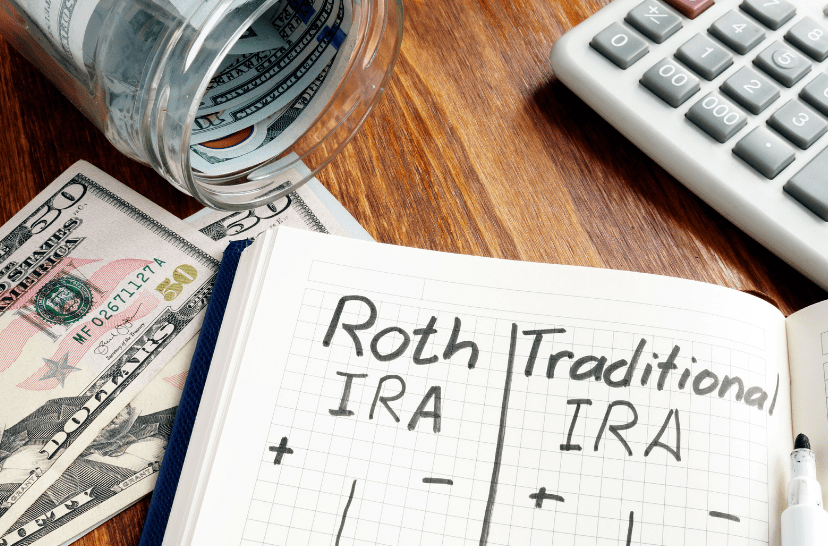
1. Traditional IRA: First up, we have the traditional IRA. Think of this as your classic, tried-and-true retirement account. With a traditional IRA, you make contributions with pre-tax dollars, which means you get a tax break now. Your contributions grow tax-deferred until you start withdrawing money in retirement, at which point you’ll pay taxes on your withdrawals at your ordinary income tax rate. Should you decide to withdraw before retirement you will be penalized. It’s a solid option if you expect to be in a lower tax bracket when you retire.
2. Roth IRA: Next, let’s talk about the Roth IRA. This is like the younger, cooler sibling of the traditional IRA. With a Roth IRA, you make contributions with after-tax dollars, so you don’t get a tax break upfront. However, the big perk here is that your growth and withdrawals in retirement are tax-free, as long as you meet certain criteria. To be eligible for a Roth IRA you would need to make less than $161,000 for single tax filers, and less than $240,000 for those married filing jointly (as of 2024). The yearly contribution limit is $7,000 for those under 50, and $8,000 for those 50 and above. The Roth IRA is attractive if you anticipate being in a higher tax bracket when you retire or if you want tax-free income in retirement.
3. Key Differences: The main difference between the two accounts boils down to when you pay taxes: with a traditional IRA, it’s deferred until retirement, while with a Roth IRA, you pay taxes upfront. Another important distinction is that traditional IRAs have required minimum distributions (RMDs) starting at age 72, while Roth IRAs have no RMDs during the account owner’s lifetime.
4. Considerations for Your Situation: When deciding between the two, it’s essential to consider your current and future tax situation, as well as your long-term retirement goals. If you’re in a high tax bracket now and anticipate being in a lower one later, a traditional IRA might be the way to go. On the other hand, if you’re young, in a lower tax bracket, or expect tax rates to rise in the future, a Roth IRA will be more advantageous.
5. Diversify Your Retirement Portfolio: Ultimately, both IRAs offer valuable tax advantages and can play a crucial role in your retirement savings strategy. Many financial experts recommend diversifying your retirement portfolio by contributing to both types of accounts, allowing you to hedge your bets and enjoy the benefits of both tax-deferred and tax-free growth.
Conclusion: The important thing is to start saving for retirement early and consistently. By understanding the differences between these accounts and aligning your choices with your unique financial situation and goals, you’ll be well on your way to building a secure and comfortable retirement.
**If you’ve found this helpful, insightful, or entertaining, please subscribe below because it allows us to contribute more to this community. Thank you in advance for subscribing and reading.**
 Aspire to Rise
Leave a comment