In the dynamic world of financial markets, understanding and interpreting trends is paramount for informed decision-making. One tool that has proven instrumental in this pursuit is the Exponential Moving Average (EMA). This blog post aims to illustrate the concept of the Exponential Moving Average and shed light on how it can be effectively employed to analyze trends in financial data.
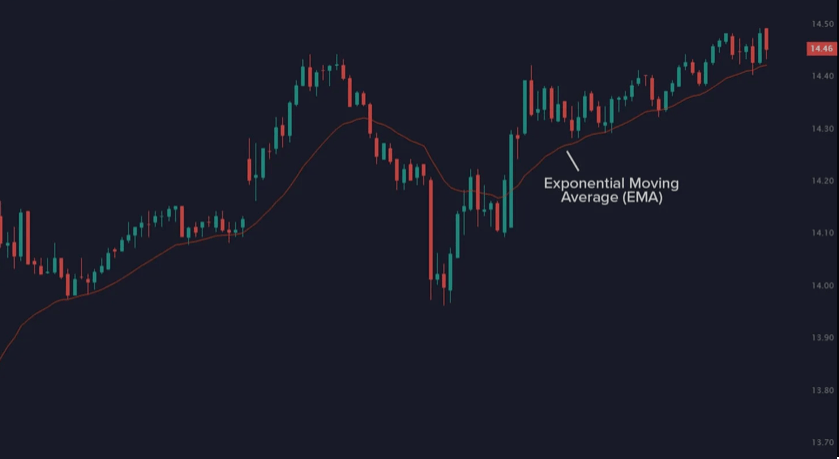
1. Description of Exponential Moving Average (EMA): The Exponential Moving Average is a statistical calculation that places greater weight on recent data points, providing a more responsive and dynamic representation of a dataset compared to its simpler counterpart, the Simple Moving Average (SMA). The EMA assigns exponentially decreasing weights to past observations, allowing it to react swiftly to changes in market conditions.
2. How EMA Differs from SMA: While both the EMA and SMA are trend-following indicators, the key distinction lies in their responsiveness to new data. The EMA, being more sensitive, adjusts its calculations more rapidly, making it particularly useful for traders and analysts who seek to capture short-term trends. In contrast, the SMA treats all data points equally, offering a smoother, but potentially lagging, representation of market movements.
3. Utilizing EMA for Trend Identification: One of the primary applications of the EMA is trend identification. Traders often use it to discern the direction of a trend and identify potential reversal points. When the current price moves above the EMA, it signals an uptrend, whereas a move below indicates a potential downtrend. The crossover of short-term and long-term EMAs can also be employed to identify entry and exit points for trades.
4. Managing Signals and False Positives: While the EMA is a powerful tool, its users must exercise caution to manage signals effectively. Rapid adjustments to new data can sometimes lead to false positives, generating signals that may not necessarily represent a significant change in the underlying trend. Combining the EMA with other technical indicators can help mitigate the risk of false signals and enhance the accuracy of trend analysis.
5. Conclusion: Lastly, the Exponential Moving Average is a valuable tool for traders and analysts seeking to navigate the complexities of financial markets. Its dynamic nature provides a real-time reflection of market trends, enabling users to make timely and informed decisions. Whether used in isolation or in conjunction with other indicators, understanding the EMA equips individuals with a versatile tool for trend analysis, enhancing their ability to stay ahead in the ever-evolving landscape of financial markets.
 Aspire to Rise
Leave a comment